


Warts
What are warts?
Warts are the result of infection with the human papilloma virus. More than ninety different variations of the wart virus have been identified to date.
Since warts are not easily identified by their specific genotypes, they are usually grouped by three methods: clinical similarities, anatomical location, or method of transmission. Some examples include:
- Flat filiform
- Genital
- Plantar (bottom of the foot)
- Periungual (occurring around the nails)
- Mucosal (on or around the mouth)
- Venereal (sexually transmitted warts)
Our immune system normally protects us from viruses. However, the wart virus does not enter the bloodstream and is not exposed to the neutralizing benefits of the body’s circulating antibodies. As a result, we must depend on local tissue immune responses to deal with the wart viruses.
The immune systems of children, adolescents, organ transplant patients and patients who have medical conditions such as leukemia, lymphoma, and AIDS can be slow to activate an immune response to eliminate the virus. Consequently, these people tend to have more warts than others.
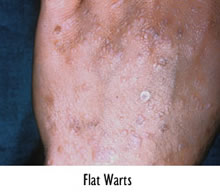
What do warts look like?
Let’s look at some examples of warts.
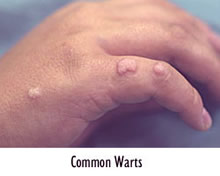
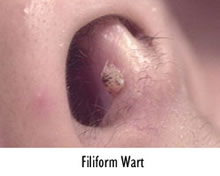
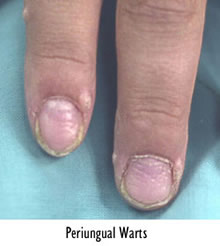
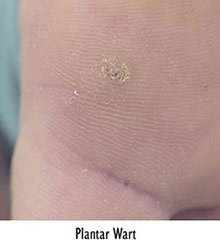
How can warts be treated?
The key to successful wart therapy lies in activating your local immune system to recognize the presence of the virus. Once activated, your body can respond and destroy the wart virus. At least thirty different forms of therapy are currently available, but none of them are uniformly effective or suitable for everyone. The course of therapy selected by the provider is often determined according to the location of the warts, the number of warts present, the age of the patient, and the patient’s perceived pain tolerance. Previous unsuccessful therapies, parental preferences, patient’s availability, cost, insurance coverage and personal convenience can all be taken into consideration as well.